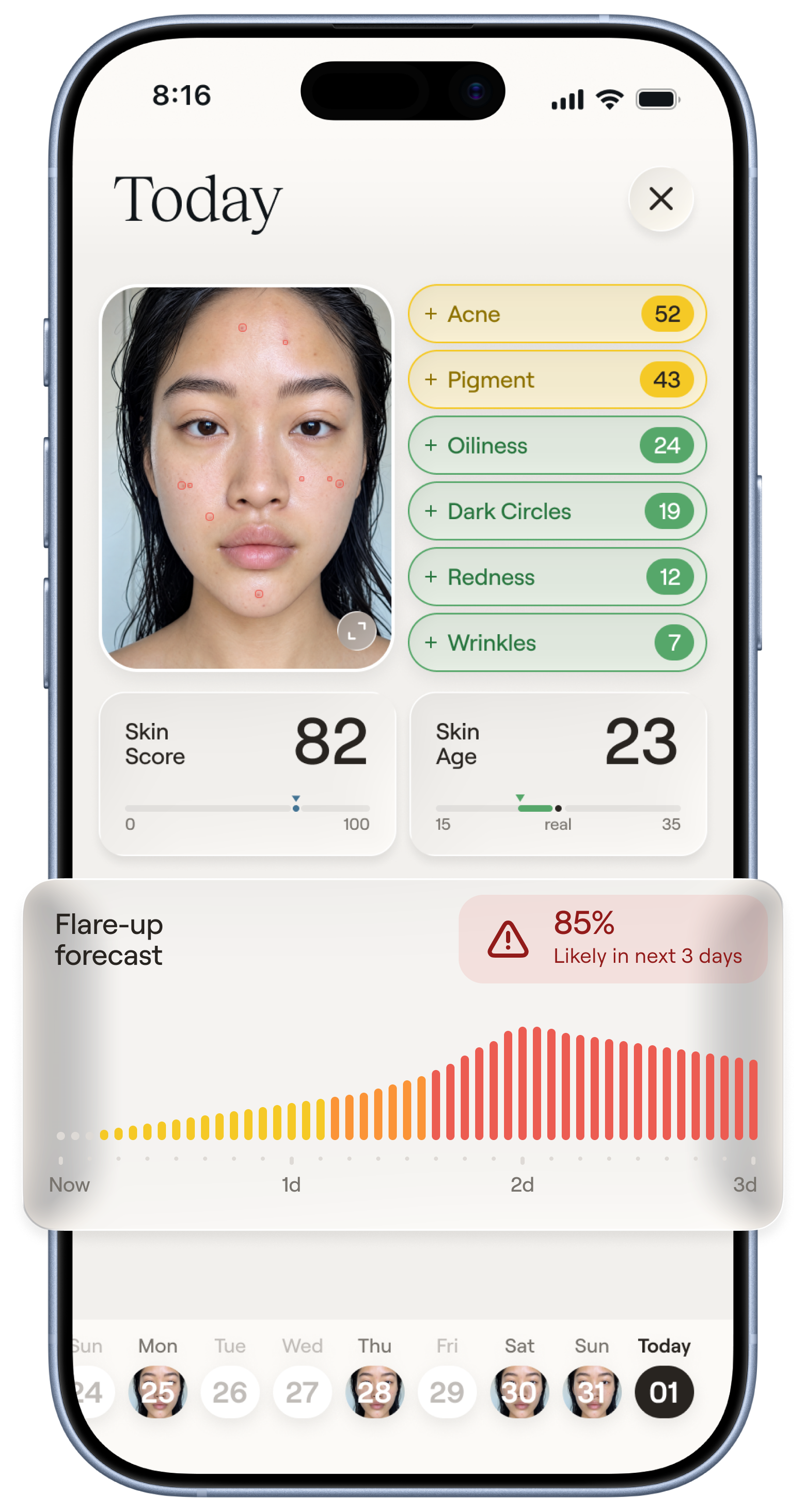
Nolla Derm is the most downloaded acne treatment app in the US App Store. People use it to get a personalized treatment plan from a clinician, receive prescribed medication, and track their skin through face scans.
When you’re treating acne, you want to know whether your skin is getting better and whether another flare-up could be on the way.
What if you could predict acne like you could predict weather?
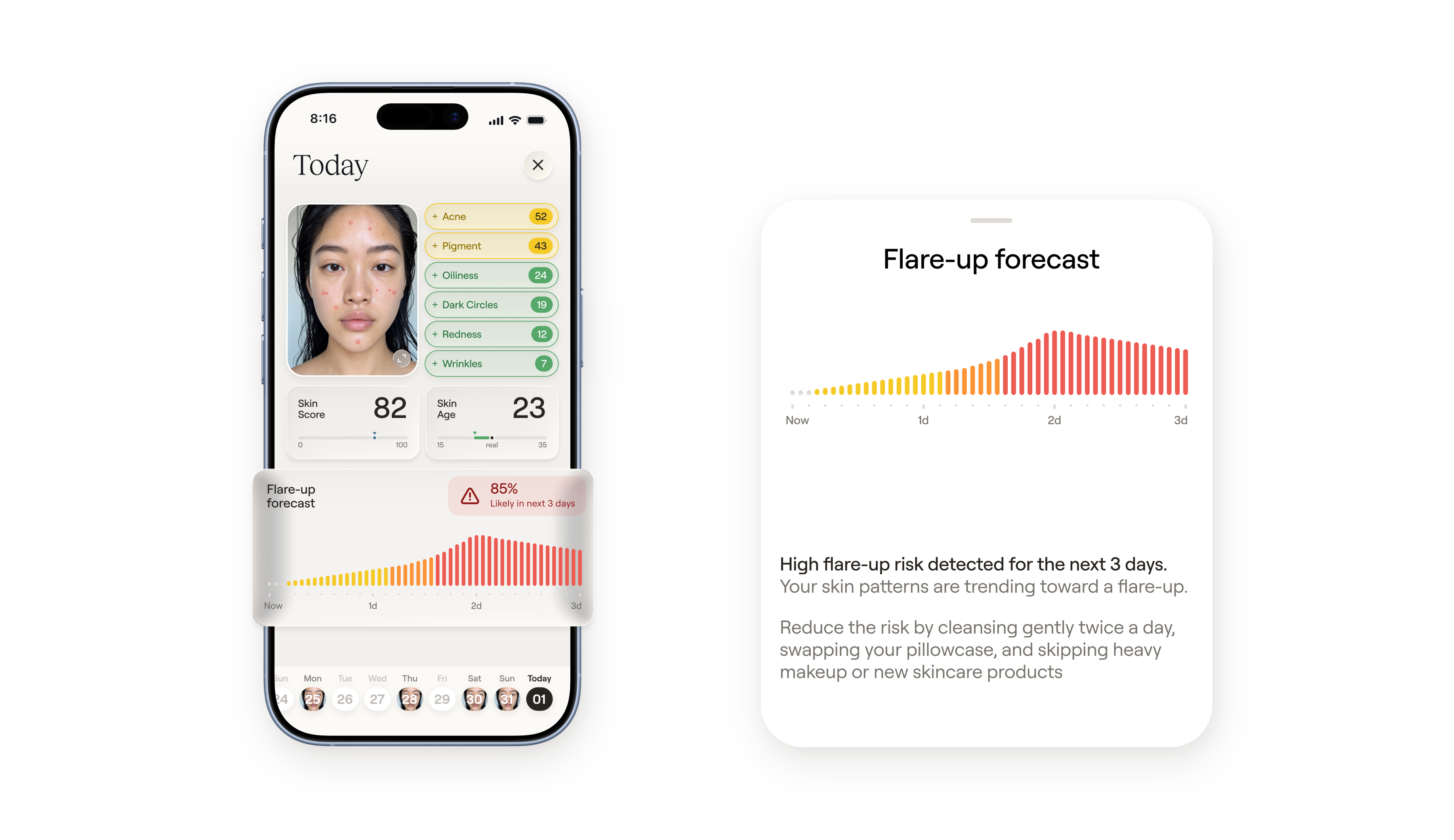
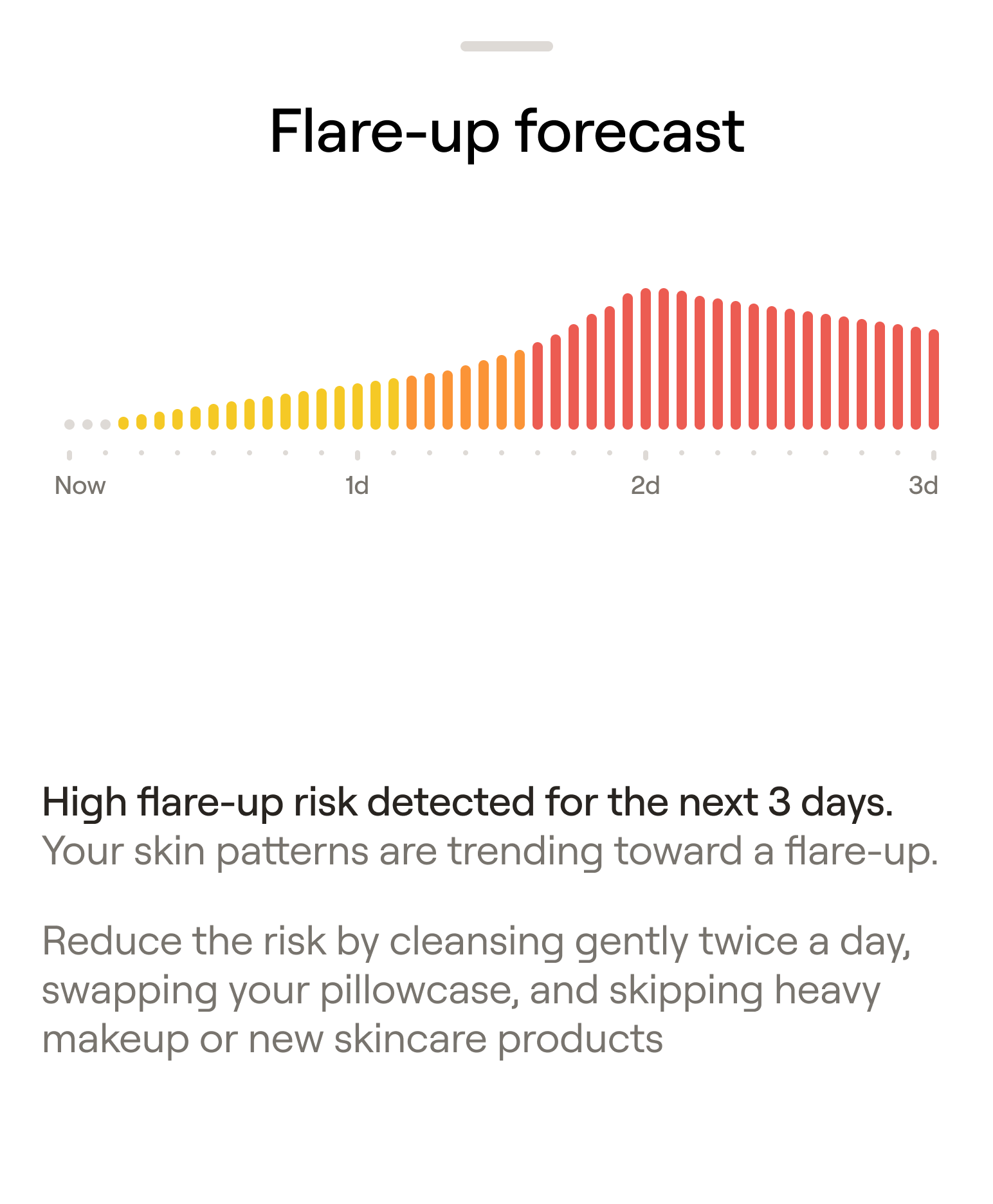
Today, we’re introducing a new system that gives you a window into how your skin might change over the next few days. It predicts whether existing acne will worsen or new pimples will appear, with the goal of helping you and your clinician make better-informed treatment decisions.
Flare up forecasting is live in the Nolla Derm app today. Scan three days in a row, and we'll generate a forecast of your risk of a flareup in the next three days.
Here’s how we built the forecasting system, from tracking individual spots across scans to training and evaluating the models.
Face Scans in Nolla Derm
A scan contains a front-facing photograph and up to four additional views: left, right, up, and down. Side views expose areas that are difficult to measure from the front, including the cheeks and jaw.
Repeated scans give us a longitudinal dataset: photographs of the same person throughout treatment. This longitudinal data records how acne changes over days and weeks, and gives us a window into the periods before a new pimple appears or existing acne worsens.
02 / Scan history
Scans over one month
Loading the scan history…
We’ve already trained models to identify acne in photographs and estimate its severity on a clinical scale.
Our segmentation models identify the pixels associated with acne and the face area used for measurement. A separate severity model uses a vision transformer to estimate a score on a clinical scale from 0 to 4. Together, these models let us measure acne in each scan and track changes during treatment.
Why predict flare-ups?
People taking repeated scans want to know whether their treatment is working and what to expect next. A forecast could give them an earlier indication of worsening acne. We want to determine whether that notice can help reduce future flare-ups through better treatment decisions.
We’ve built new models to predict acne flare-ups from a person’s scan history in Nolla Derm. They estimate whether existing acne will worsen and where new pimples may appear over the next one to seven days.
The scan history lets us train against changes that happen later. We can look at the measurements before a flare-up and learn which patterns tend to precede it. That requires a consistent record of individual spots, including when they first appeared and how they changed.
Tracking skin changes across scans
To track how skin changes, we need to compare the same patches of skin across scans, even when the photos are taken from different angles. We map each photograph onto a shared 3D face model so we can follow existing spots and identify new ones.
A shared 3D face map
A pimple moves to a different pixel position when someone turns their head or holds the camera farther away. Before comparing scans, we need to assign observations of the same skin location to the same coordinates.
We detect facial landmarks, such as points along the eyes, nose, lips, and face outline, and use them to fit a three-dimensional reference head to each photograph. This geometric alignment is called registration. It lets us combine overlapping views and compare the same part of the cheek across different scans.
The full reference mesh has roughly 17,000 vertices, or surface points, organized into 105 regions. We sample the image-model outputs at these points and combine observations from the available views.
Tracking individual spots
Two scans can show the same number of pimples even when some spots have healed and others have appeared. We track individual spots to capture those changes. A spot that has been there for a week has a different history from one first seen today.
When someone takes a scan, we place the segmentation model’s acne scores onto the shared 3D face map. This lets us follow the same skin locations over time and measure how their scores change. We also compare redness at each location with calmer skin in the same scan. Locations the camera cannot see remain unobserved.
Lighting and camera angle can make a spot look different even when the skin has barely changed. We therefore require repeated evidence across scans before confirming that a spot has appeared or cleared. We use different score thresholds for those two decisions, which helps avoid recording an existing spot as disappearing and then appearing again just because the photograph looks different.
How the forecasts work
When someone takes a new scan, we look at it alongside up to nine earlier scans to understand how their skin has been changing. We measure changes in acne scores, redness, and severity, track how long spots have persisted, and account for the time between scans. Measurements from neighboring areas and the whole face help put each location’s changes in context.
We combine those measurements with image features from our acne vision transformer. The model produces an embedding which we reduce to 32 features using principal component analysis (PCA). This gives the forecasting models both visual information from the photograph and measurements of change over time.
Separate gradient-boosted tree models use these inputs to make two predictions, each looking ahead 1, 2, 3, 5, or 7 days:
Flare-up: Will existing acne get worse?
Breakout: Where might new pimples appear on currently clear skin?
To train the models, we pair scan histories with what happened next. For flare-ups, we track changes in severity around confirmed lesions, using five categories from major improvement to major worsening. The probabilities of the two worsening categories add up to the flare-up probability. For breakouts, we look for new lesions at locations previously confirmed clear. Later scans provide the outcomes the models learn from; they never enter the prediction inputs.
The models first make predictions for individual lesions and clear locations. We then combine these into estimates for regions and the whole face, adjusting the probabilities using calibration fitted to observed outcomes.
05 / Forecasts
Three-day flare-up and breakout forecasts
Select a scan to see its forecast.
Loading forecasts…
The timeline includes a June 12 breakout forecast of 85%, followed by scans that confirmed new lesions at previously clear locations. A June 18 flare-up forecast of 75% was followed by increased regional severity around tracked lesions. These are retrospective examples, not clinician-adjudicated outcomes or a prospective trial.
Initial results
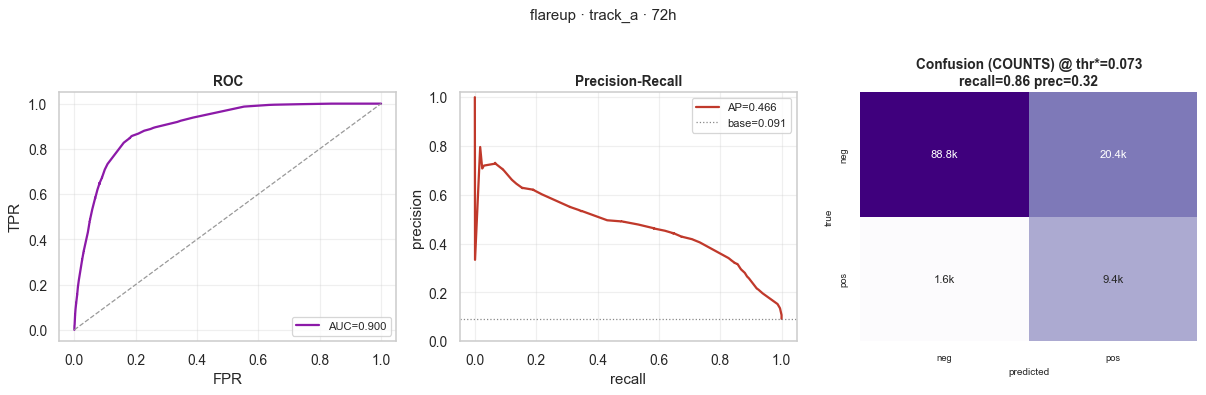
In our initial internal tests, both models could identify which spots were more likely to worsen or develop acne over the next three days. They achieved AUROC scores of 0.900 for flare-ups and 0.914 for breakouts, indicating strong performance at ranking risk. Predicting exactly where a new pimple will appear remains an area for improvement.
What we’re working on next
We’re working on measuring how skin responds to different medications over time. We want to understand which treatments are helping, how quickly they take effect, and how responses vary from person to person.
Nolla Derm already supports rosacea, hyperpigmentation, and wrinkles. We’re extending our work on tracking changes and treatment response beyond acne to these and other skin concerns.
We’re also working on similar longitudinal mapping problems in other areas of medicine, including women’s health.
We’re looking for ML engineers who want to work on medical computer vision and longitudinal prediction. The work spans image models, geometric registration, noisy time series, rare-event prediction, and evaluation against clinical outcomes.